6 min read

What to wear on a desert safari in Egypt

The desert is not complicated to dress for, but the people who get it wrong really feel it. Dust in the eyes, cold arms on the evening ride, flip flops on a quad. Here is the exact packing list we give our own guests before every tour.

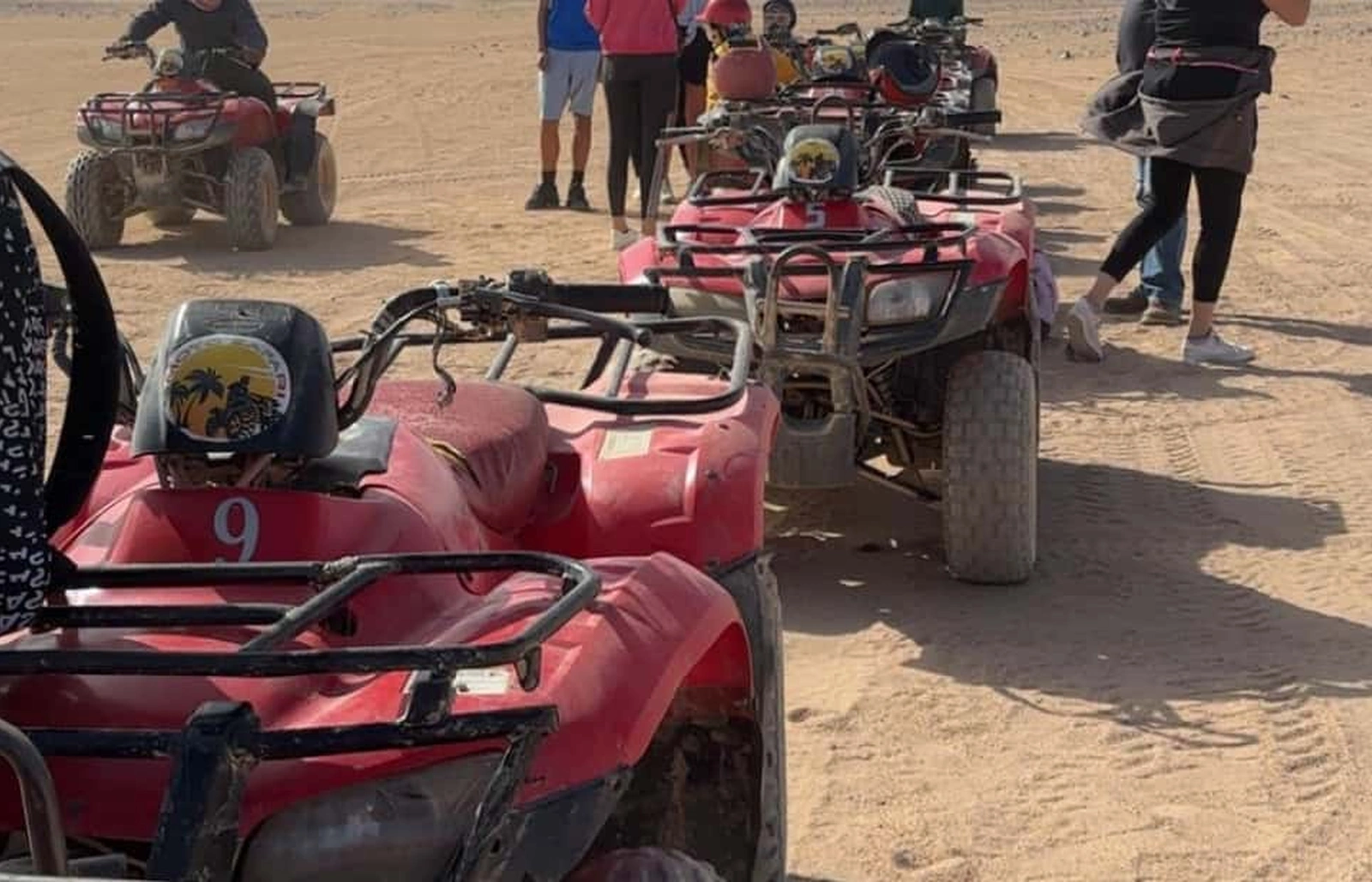
Quad bike rider crossing the desert at sunset with a scarf and sunglasses on

Every week we watch someone arrive at the quad station in beach sandals and a fresh white shirt, and every week the desert wins that argument. Dressing for a safari day is easy once you know the three things the desert throws at you: sun, dust, and a temperature drop after sunset that surprises everyone. This guide covers the full list, from shoes to phone protection, plus what changes between summer and winter and what we already hand out so you do not pack it twice. Five minutes of reading, and you step off the bus looking like you have done this before.

Closed shoes, no exceptions

This is the one rule we actually enforce. On a quad or buggy your feet sit next to hot engine parts, foot pegs, and flying gravel, and sandals turn small moments into bad ones. Trainers or sneakers you do not love too much are perfect. They will fill with fine sand, all shoes do, so leave the new white pair at the hotel. For camel and horse rides closed shoes matter too, because stirrups and sandy ground work better with a real sole. If you only packed flip flops for the whole holiday, buy a cheap pair of trainers in town before the tour. You will use them the entire trip anyway.

Sunglasses are equipment, not style

Desert light comes at you twice, once from the sky and once bouncing off the sand. Riding into it without eye protection means squinting through the best part of the day. Bring sunglasses that sit close to your face, and if you wear prescription glasses, bring those plus a strap so they survive the bumps. For the quad rides, goggles do the job even better because they seal against dust. We do not include goggles in the tour price, but you can bring your own or pick up a pair at the station before we ride out. Contact lens wearers should lean toward goggles, dust and lenses are not friends.

A scarf or buff is the most useful thing in your bag

Ask anyone who has ridden in a quad group: the riders behind the leader eat a little dust, that is physics. A cotton scarf, a shemagh, or a simple buff pulled over your nose and mouth solves it completely, and it doubles as sun protection for your neck. You can bring one from home, buy one at the station, or pick one up cheaply in any bazaar in town, where choosing one is half the fun. Tie it before the ride starts, not after the first dusty stretch. On camel rides and jeep days it is less critical, but the sun protection alone still earns its place.

Layers, because the desert flips after sunset

This is the part nobody believes until they feel it. Sand holds no heat, so the moment the sun drops, the temperature drops with it, fast. On evening tours like the Super Safari or the stargazing trips you leave the hotel in T-shirt weather and eat dinner in light-jacket weather. The fix is simple: wear the T-shirt, pack a hoodie or windbreaker in a small backpack, and put it on when the light turns gold. On the ride back you will be very glad it exists. In winter make it a proper jacket, the evening desert in January is genuinely cold.

Summer packing versus winter packing

From May to September, think light and covered: breathable long sleeves or a T-shirt plus sunscreen, light trousers or knee-length shorts, a cap under the helmet time, and more water than you think you need. The heat is dry, which feels comfortable but dehydrates you quietly. From November to March the day is warm and gentle, around 20 to 25 degrees, but mornings and evenings ask for a fleece or jacket, and on night tours a warm layer is not optional. April and October are the easy months where a T-shirt plus one layer covers everything. Whatever the month, sunscreen is a year-round item, winter sun in the desert still burns.

What we hand out, so you do not overpack

Helmets are included on every quad and buggy tour, fitted at the station before the safety briefing, and the horse rides include riding helmets too. The guide carries the route plan and the group pace, so you do not need navigation, and Bedouin tea at the desert stop is part of the trip. Bottled water is included on the jeep and horse tours, and cheap to grab beforehand for the others. What we do not provide for free: scarves, goggles, and professional photos. Those are the only things worth deciding about in advance. Everything else on your list is just clothes you already own.

Sand versus your phone and camera

Desert sand is fine like powder and it loves charging ports, lens mechanisms, and zippers. The solution costs nothing: a zip-lock bag from any supermarket. Phone goes in the bag, bag goes in a zipped pocket or small backpack, and it comes out for photos at the stops, not mid-ride. If you bring a GoPro, a chest or helmet mount beats holding it, you want both hands on the bars. Cameras with zoom lenses should stay in a closed bag until the group stops moving. And check your pockets before the quad starts, the desert has a growing collection of phones that jumped out of open pockets on the first bump.

Leave these at the hotel

Jewelry you care about, watches that hate dust, and anything that cannot survive a fall have no business on a quad. The same goes for large bags, laptops, and passports, a photo of your passport on your phone is enough for the day. Bring a small amount of cash for extras like a scarf, a drink, or tips if you feel like it, and leave the rest in the hotel safe. Dresses and loose flowing clothes are beautiful and wrong for machines with moving parts, save them for the dinner photos at the Bedouin camp if you want, and change after the riding is done.

That is the whole science: closed shoes, eyes covered, scarf up, one warm layer, phone in a bag. If you are still unsure what fits the tour you picked, or you are choosing between a daytime ride and an evening safari, message us on WhatsApp and we will help you pick the right one and tell you exactly what to bring.